2015: My fears for Nigeria–Itse Sagay
Latest Politics, Top Stories Wednesday, July 17th, 2013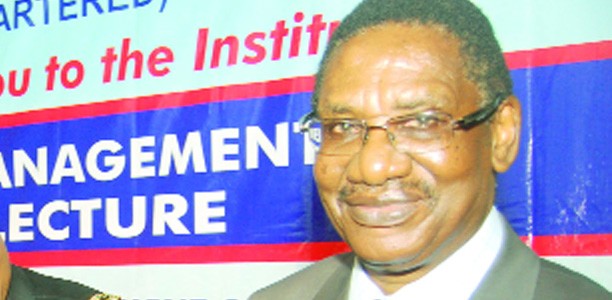 To many, the crisis currently rocking Rivers State is enough to derail the nation’s democracy. Analysts argue that all the parties to the conflict should apply caution to prevent it fron snowballing into a state of lawlessness. In this interview with WILLY EYA, a public affairs commentator and renowned lawyer, Prof. Itse Sagay (SAN), reflects on the Rivers crisis, among other issues. Excerpts…
Rivers State is in the news. What are your reflections on the political developments in the state?
For those of us that are of the older generation, this is a déjà vu. It is a déjà vu in the sense that we have seen it before in 1962 in the Western region when the Federal Government fomented trouble in the Western region, which led to chaos and disorder in the House in Ibadan. It was, of course, playing out a script that had been written down by the Federal Government and their associates in the West and straight away, an emergency rule was declared in the West. And from that stage, there was no looking back, as we slipped into darkness.
So, those who are instigating what is happening in Port Harcourt now should look at our history and avoid being victims of history. This is because by promoting violence in a state House of Assembly with the intention of taking over that state, you are really going into very slippery grounds whose end nobody can predict. So, to save this federation from a preventable crisis and possible calamity, people should allow the elected officials of Rivers State to continue to run the government.
The governor and members of the House of Assembly should be left alone. Those who are opposed to them should wait until 2015 and try to bring in their men democratically by election and not removal by force. Some clown just jumped up in the House and said he had been made the Speaker and that the main Speaker had been impeached. If you look at it on the television, it makes a joke of this country. That is not the sort of thing we want to see.
From your vantage position, what do you think is the level of involvement of the Presidency in all of the happenings in Rivers State?
I really do not know. There is no way I can tell but I am saying that the President, Federal Government and everybody, should leave Rivers State alone. Leave the state governments alone; let them run their own governments just as the Federal Government is running itself without anybody interfering with it. This is a federation and we are supposed to have autonomous governments. Do not try to control everybody. If they do that, there will be peace and development but to interfere and try to dictate what happens in a state and talking of loyalty and all that stuff when loyalty should be to Nigeria is not acceptable.
We do not owe individuals loyalty in Nigeria no matter what office they hold. We owe loyalty to Nigeria and the Supreme Court has already declared so in the case of Atiku Abubakar versus former President Olusegun Obasanjo; Obasanjo tried to remove Atiku Abubakar because he said he was not loyal to him. The Supreme Court said he was not supposed to be loyal to him. You are not entitled to his loyalty. He was elected by Nigerians and his only loyalty is to Nigeria. That applies not only to Obasanjo but to all his successors.
What is your take on the session by the House of Representatives on the Rivers crisis? As a lawyer, what is the extent of the powers of the lower chamber of the National Assembly with regards to the situation in Rivers?
They can do a lot of things. From what I could see, they are moving a motion to enable the National Assembly legislate directly for Rivers State based on the argument that the Rivers State Assembly cannot meet to legislate. But my view is that they are jumping the gun. This situation involves not only technicality of law but the morality of politics. What they should be thinking of is how to compel the law enforcement officers to operate objectively, independently so that they would protect members of the state House of Assembly to operate. It is not in effect to take the jobs of members of the Rivers State House of Assembly and put them in suspense because somebody is fomenting trouble.
Looking at the tension in Nigeria ahead of 2015 general elections, what are your fears?
Politicians are too desperate for power and because of that, they go to any length. If they are not careful, that length may endanger the whole polity. So, my fears are that, there are ominous tidings and signs about 2015 because of the desperation of politicians. One does not have to been in power. We were not born into power. So, if you could survive while you were not in power, why are politicians so desperate to get into power? People should begin to look at power in a larger space if I may put it that way. Power should be looked in larger terms that life does not begin and end in being in a political office.
How do you see the response of the Presidency to the situation in Rivers State and do you think President Jonathan’s administration is handling the tension in the country ahead of 2015 general elections?
There are severe challenges. In fact, this is the irony of the whole situation. The challenge of the Boko Haram Islamist sect is enough to take the time of the president, the Federal Executive Council (FEC), security agencies and so on. There was a major challenge and there was an attempt to overthrow the state. So, what is happening now in Rivers State is an unnecessary distraction.
That is why the president and all those at the federal level should do everything to allow peace reign. Whoever is in charge should be left alone because they were elected so that they can concentrate on the larger and more dangerous threat to the country. But on the management of the crisis from the Boko Haram sect, things seem to be improving after the declaration of a state of emergency and troops were sent in. We need to sustain that improvement even though there are one or two setbacks in the Borno boarding school massacre and so on. But we should learn from that and improve our surveillance measures to curb this Boko Haram uprising. Things are improving and I think we should just concentrate on that. Leave the states to rule themselves. The Federal Government and the State government are not connected directly.
The Senate Ad-hoc Committee on the Constitution Review has come up with its report. How do you see the work of the effort?
The review is going to worsen the lot of Nigerians. There is something very perverse about the National Assembly. When this issue of constitution review arises, where they should be going right, they would turn left and face it resolutely and continue to work in the wrong direction. The National Assembly
has always been like that. The problem of Nigeria is not whether there is immunity or no immunity for the president but the problem is that we are a declared federation that is practicing a unitary system of government. The duty of any constitutional review is to take us back to federalism. That involves the transference of power and resources from the Federal Government to the states.
It would involve restructuring of the federation so that you have groupings of states along zonal lines to form powerful regions that would develop independently while the Federal Government is doing its own. Those are the areas we should be looking at. There should be greater fiscal federalism so that states could keep what they generate and pay something to the Federal Government to run itself. When you are independent economically and politically, you do not have to go to Abuja every month to collect a dole from the Federal Government when your state has resources.
Rather, it should be the states that should be sustaining the Federal Government because the Federal Government has little or no resources. The only place it has is Abuja and I am not sure that Abuja has much of resources. All the resources that the Federal Government is now controlling belong to the states. Oil belongs to the oil producing states. If you talk of Value Added Tax (VAT), 60 per cent comes from Lagos. If you talk of Customs revenue, it is from the states that are importing goods. So, if you look at it, all these resources that the Federal Government is disbursing belong to the states. Leave them with the states and let them pay a certain sum as we used to do in the First Republic.
Let the Federal Government not worry about the states. With what they have left, they would run themselves. Thirty per cent is put in a distribution account. The states keep 50 per cent and pay 20 per cent to the Federal Government and keep 30 per cent in a distribution account. The distribution account is further divided amongst all the states based on needs. That is the way the richer states would help the poorer states.
That is the way it used to be and nobody went to Abuja and to Lagos. Awolowo stayed in Ibadan, Ahmadu Bello stayed in Kaduna and Okpara or Zik stayed in Enugu and ran their governments. They did not come to Lagos for anything and you could see independence and autonomy. The country was developing fast. Now we have this suffocating unitary arrangement for which the Federal Government collects all the resources of the states and asks them to come and beg to take a little back home every month. There is no country that can develop like that.
-Sun
wp_posts
Related Posts
- 2027: Tinubu worst President ever, North finished if he wins again – Baba-Ahmed
- Nigeria not a Muslim country – Rev Dachomo counters Sheikh Jingir
- Why we planned coup against Tinubu – Colonel Ma’aji, without legal counsel
- Osun Election: ‘Oyinlola jealous of me and my family’ – Gov Adeleke
- Four APC govs under scrutiny for ‘cheering’ Sheik Jingir during anti-Christian comment


Short URL: https://newnigerianpolitics.com/?p=31355


 Posted by admin
on Jul 17 2013. Filed under Latest Politics, Top Stories.
You can follow any responses to this entry through the RSS 2.0.
You can leave a response or trackback to this entry
Posted by admin
on Jul 17 2013. Filed under Latest Politics, Top Stories.
You can follow any responses to this entry through the RSS 2.0.
You can leave a response or trackback to this entry